
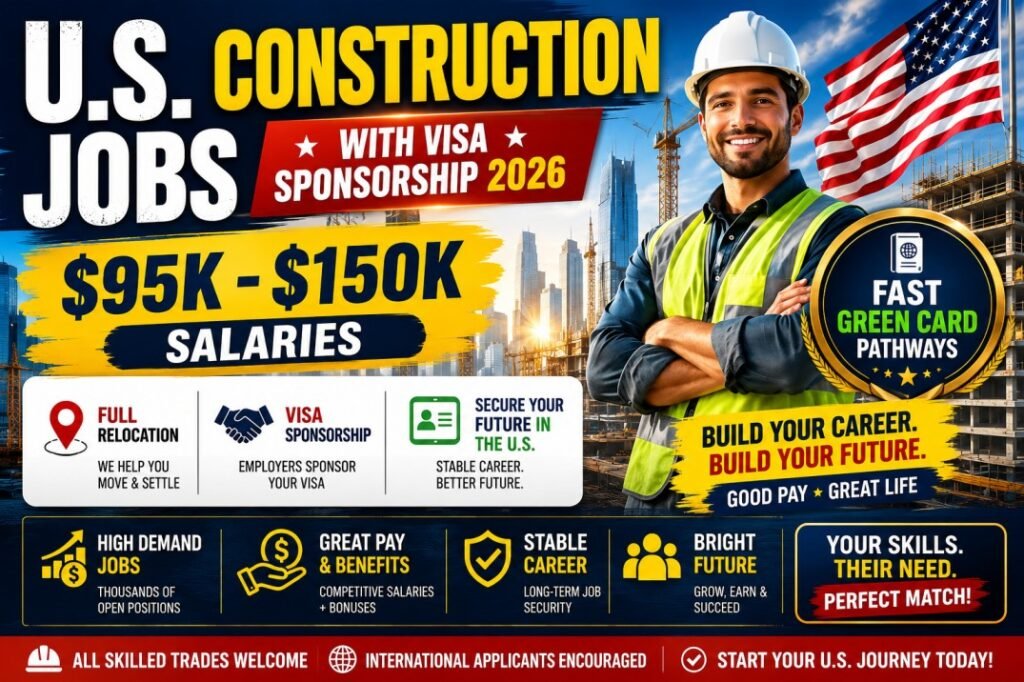
Construction Jobs in the USA with Visa Sponsorship 2026: High-Paying Careers, Relocation Benefits & Green Card Opportunities
The United States continues to face a major shortage of skilled construction workers, creating excellent opportunities for qualified international professionals. In 2026, many U.S. employers are actively recruiting foreign workers by offering visa sponsorship, competitive salaries, relocation assistance, health insurance, and long-term career growth.
Whether you are an electrician, carpenter, welder, plumber, heavy equipment operator, or construction manager, there are thousands of positions available across the country. Many employers also support eligible candidates through employment-based immigration programs that may eventually lead to permanent residency.
This guide explains the most important visa options, expected salaries, relocation benefits, and practical steps for finding construction jobs in the United States.
Why the U.S. Construction Industry Needs International Workers
The American construction sector is experiencing one of the largest labor shortages in decades. Massive investments in highways, airports, commercial buildings, renewable energy projects, manufacturing facilities, and residential developments have significantly increased the demand for skilled labor.
Government infrastructure spending and private-sector investments continue to create thousands of new job openings every year. At the same time, many experienced workers are retiring, leaving employers with fewer qualified candidates.
Because of this shortage, many companies are expanding their recruitment efforts beyond the United States and are willing to sponsor qualified international applicants.
Professionals with specialized technical skills, recognized certifications, and several years of experience often receive the most attractive employment offers.
Average Construction Salaries in the USA (2026)
Construction salaries vary depending on experience, location, certifications, and employer.
Typical annual salary ranges include:
| Position | Estimated Salary |
|---|---|
| Construction Laborer | $38,000 – $55,000 |
| Carpenter | $50,000 – $80,000 |
| Electrician | $60,000 – $95,000 |
| Plumber | $58,000 – $92,000 |
| Welder | $50,000 – $90,000 |
| Heavy Equipment Operator | $55,000 – $100,000 |
| Construction Supervisor | $75,000 – $120,000 |
| Construction Manager | $90,000 – $160,000+ |
Salary estimates are based on data from the U.S. Bureau of Labor Statistics.
Employees working overtime, night shifts, or specialized projects can often earn significantly more than their base salary.
Many companies also provide additional benefits that increase total compensation.
What Is Included in a Construction Relocation Package?
Some employers provide relocation assistance to help international workers settle into life in the United States.
Depending on the employer and job role, relocation packages may include:
- Paid visa sponsorship
- Flight reimbursement
- Temporary accommodation
- Housing assistance
- Transportation allowance
- Sign-on bonus
- Health insurance
- Paid training
- Tool allowance
- Retirement benefits
- Performance bonuses
Senior professionals and highly specialized trades may receive relocation packages worth tens of thousands of dollars in total employment benefits.
U.S. Visa Sponsorship Options for Construction Workers
Understanding the available visa programs is one of the most important steps before applying for jobs.
1. H-2B Temporary Work Visa
The H-2B Visa is commonly used by employers that need temporary non-agricultural workers.
It is often suitable for:
- Carpenters
- Electricians
- Roofers
- Painters
- Plumbers
- General construction laborers
- Masons
Key Features:
- Employer-sponsored
- Temporary employment
- Renewable in certain situations
- Competitive hourly wages
- Overtime opportunities
This program is widely used by construction companies experiencing seasonal or project-based labor shortages.
2. H-1B Visa for Construction Professionals
The H-1B Visa is designed for professional occupations requiring specialized education.
Typical eligible positions include:
- Civil Engineer
- Structural Engineer
- Construction Project Manager
- Architect
- Engineering Consultant
- Construction Management Professional
These positions generally offer higher salaries and stronger long-term career opportunities.
Many employers also provide comprehensive employee benefits, including:
- Medical insurance
- Dental coverage
- Retirement plans
- Paid vacation
- Professional development
- Performance bonuses
3. EB-3 Employment-Based Green Card
Workers seeking permanent employment often explore the EB-3 Employment-Based Green Card.
This immigration pathway may be available for:
- Skilled workers
- Qualified professionals
- Certain other permanent employees
For eligible applicants, employer sponsorship through the EB-3 category can eventually lead to lawful permanent resident status, depending on current immigration requirements and processing times.
4. TN Visa
Citizens of Canada and Mexico working in certain professional occupations may qualify for TN status under the United States-Mexico-Canada Agreement (USMCA).
This option is generally available for licensed professionals such as engineers and architects rather than skilled construction trades.
Why Skilled Workers Earn More
Construction employers highly value workers who possess industry-recognized certifications and practical experience.
Professionals with credentials in safety, welding, electrical systems, crane operations, project management, or specialized equipment operation often receive:
- Higher salaries
- Better relocation packages
- Faster promotions
- Larger bonuses
- Greater job security
Investing in professional training can significantly improve earning potential throughout a construction career.
Is 2026 a Good Time to Apply?
For many qualified international workers, 2026 presents strong employment opportunities.
Companies across the United States continue hiring skilled tradespeople for residential, commercial, industrial, and infrastructure projects. Employers are increasingly offering competitive compensation packages to attract experienced professionals from around the world.
Applicants with relevant experience, recognized certifications, and strong communication skills are often in a better position to secure visa-sponsored employment.
Next Part (Part 2)
In Part 2, I’ll rewrite:
- High-Demand Construction Jobs
- Electrician Jobs
- Plumber Jobs
- Carpenter Jobs
- Welder Jobs
- Heavy Equipment Operator Jobs
- Construction Manager Jobs
- Salary Growth
- Extra Income Opportunities
Highest-Paying Construction Jobs for International Workers
The U.S. construction industry offers a wide variety of career opportunities for skilled professionals. Whether you specialize in electrical work, plumbing, welding, carpentry, or heavy equipment operation, employers are actively searching for qualified workers to fill thousands of open positions.
The highest-paying jobs usually require experience, professional certifications, and strong technical skills. Workers who are willing to relocate or work on large infrastructure projects often receive even better compensation packages.
Electrician Jobs in the USA
Electricians remain among the most in-demand skilled trades in the United States. Rapid growth in residential construction, renewable energy projects, commercial buildings, and industrial facilities continues to increase the demand for licensed electrical professionals.
Average Salary
- Apprentice Electrician: $40,000 – $55,000
- Journeyman Electrician: $60,000 – $80,000
- Master Electrician: $85,000 – $110,000+
Typical Benefits
- Visa Sponsorship
- Paid Overtime
- Medical Insurance
- Dental & Vision Coverage
- Paid Vacation
- Retirement Plan (401k)
- Tool Allowance
- Performance Bonuses
Electricians with solar, industrial automation, or high-voltage experience are often offered premium salaries.
Plumber Jobs with Visa Sponsorship
Plumbing professionals continue to enjoy excellent employment opportunities throughout the United States. New housing developments, commercial buildings, hospitals, and manufacturing facilities require experienced plumbers year-round.
Average Salary
- Apprentice Plumber: $42,000 – $55,000
- Licensed Plumber: $60,000 – $85,000
- Master Plumber: $90,000 – $120,000
Additional Income Opportunities
Many plumbers increase their earnings through:
- Emergency service calls
- Weekend work
- Overtime
- Commercial maintenance contracts
- Specialized pipe installation
These opportunities can significantly increase annual income beyond the base salary.
Carpenter Jobs in America
Experienced carpenters continue to be highly valued across residential, commercial, and industrial construction projects.
Common specialties include:
- Finish Carpentry
- Framing
- Cabinet Installation
- Concrete Formwork
- Interior Renovation
Salary Range
- Entry-Level Carpenter: $42,000 – $55,000
- Skilled Carpenter: $55,000 – $75,000
- Senior Carpenter: $80,000 – $100,000
Many employers also reward employees with completion bonuses after successfully finishing major construction projects.
Welder Jobs with High Salary Potential
Certified welders are among the highest-paid skilled trades in the construction industry.
Workers experienced in structural steel, pipelines, manufacturing plants, and heavy industrial projects are especially valuable.
Estimated Salary
- Entry-Level Welder: $45,000 – $60,000
- Certified Welder: $60,000 – $85,000
- Pipeline Welder: $80,000 – $110,000
- Specialized Industrial Welder: Up to $130,000+
Employers Often Provide
- Relocation Assistance
- Paid Certification Renewal
- Safety Equipment
- Daily Travel Allowances
- Performance Bonuses
Professional certifications can substantially improve both salary and job opportunities.
Heavy Equipment Operator Careers
Construction companies rely heavily on skilled equipment operators to complete infrastructure and commercial projects safely and efficiently.
Common equipment includes:
- Excavators
- Bulldozers
- Cranes
- Forklifts
- Loaders
- Backhoes
Average Salary
- Equipment Operator: $55,000 – $75,000
- Crane Operator: $80,000 – $120,000
- Specialized Operators: Up to $140,000
Workers operating complex machinery often receive hazard pay, overtime, and project completion incentives.
Construction Manager Jobs
Construction management is one of the highest-paying career paths in the industry.
Managers oversee project planning, scheduling, budgeting, safety compliance, and workforce coordination.
Salary Expectations
- Assistant Project Manager: $70,000 – $90,000
- Construction Manager: $95,000 – $140,000
- Senior Project Manager: $150,000+
Most employers also provide:
- Annual Bonuses
- Company Vehicle
- Health Insurance
- Retirement Benefits
- Paid Training
- Leadership Development Programs
Professionals with engineering or project management backgrounds usually qualify for these positions.
Additional Employee Benefits
Besides competitive salaries, many employers offer valuable benefits that improve total compensation.
These may include:
- Employer-sponsored Health Insurance
- Dental Insurance
- Vision Coverage
- Paid Sick Leave
- Paid Holidays
- Retirement Savings Plans
- Life Insurance
- Disability Insurance
- Tuition Assistance
- Professional Certification Support
These benefits can significantly increase the overall value of an employment package.
Ways to Increase Your Income
Experienced construction workers often earn well above their base salary by taking advantage of additional earning opportunities.
Some of the best methods include:
- Working overtime
- Accepting night shifts
- Completing specialized certifications
- Taking leadership roles
- Learning multiple construction trades
- Working on large commercial projects
- Operating specialized machinery
- Improving English communication skills
Employers frequently reward skilled, reliable workers with promotions and salary increases.
Skills Employers Value Most
International applicants who possess the following skills are often more competitive:
- Electrical Installation
- Plumbing Systems
- Welding
- Blueprint Reading
- Equipment Operation
- Construction Safety
- Quality Control
- Project Coordination
- Team Leadership
- Problem Solving
Strong technical skills combined with professional certifications can improve both hiring prospects and earning potential.
Why Construction Remains a Strong Career Choice
Construction continues to be one of the most stable industries in the United States. Ongoing investments in housing, transportation, renewable energy, manufacturing, and public infrastructure are expected to create thousands of new employment opportunities in the coming years.
For international professionals, this demand translates into long-term career growth, competitive salaries, valuable benefits, and opportunities for permanent employment.
Next: Part 3 will cover:
- How to Apply for Visa-Sponsored Jobs
- Best Job Websites
- Top U.S. Companies Hiring Foreign Workers
- Resume Tips
- Visa Application Process
- Relocation Assistance
- Interview Preparation
- Salary Negotiation Tips
How to Apply for Construction Jobs in the USA
Finding a construction job with visa sponsorship requires planning and preparation. Employers are looking for candidates who have the right skills, relevant work experience, and a professional attitude.
Before applying, make sure your resume, certifications, and employment history are updated. A strong application can improve your chances of receiving an interview invitation and employer sponsorship.
Step 1: Choose the Right Job
Start by identifying positions that match your experience and qualifications.
Popular construction careers include:
- Electrician
- Plumber
- Carpenter
- Welder
- Mason
- Heavy Equipment Operator
- HVAC Technician
- Construction Laborer
- Site Supervisor
- Construction Manager
Applying for positions that closely match your skills increases your chances of getting hired.
Step 2: Prepare a Professional Resume
Your resume is often the first impression employers have of you.
Include:
- Personal Information
- Professional Summary
- Work Experience
- Technical Skills
- Certifications
- Education
- Languages Spoken
- Safety Training
- References (if available)
Resume Tips
✔ Keep it 1–2 pages.
✔ Highlight measurable achievements.
✔ Use action words like:
- Installed
- Managed
- Operated
- Supervised
- Repaired
- Constructed
- Maintained
- Inspected
A well-organized resume helps employers quickly understand your qualifications.
Step 3: Earn Valuable Certifications
Professional certifications can significantly improve your employment opportunities.
Popular certifications include:
- OSHA Safety Training
- NCCER Certification
- AWS Welding Certification
- Crane Operator Certification
- HVAC Certification
- Electrical Licensing
- Plumbing License
- First Aid & CPR
Certified professionals are often offered better salaries and more responsibilities.
Step 4: Search for Visa Sponsorship Jobs
Many employers advertise positions specifically open to international candidates.
Useful job platforms include:
- Indeed
- LinkedIn Jobs
- Glassdoor
- ZipRecruiter
- CareerBuilder
- Monster Jobs
- SimplyHired
Use search phrases like:
- USA Construction Jobs Visa Sponsorship
- Electrician Jobs USA
- Carpenter Jobs with Sponsorship
- Skilled Trade Jobs USA
- Construction Manager USA
Filtering search results helps you find relevant opportunities faster.
Step 5: Apply to Multiple Employers
Don’t rely on a single application.
Successful candidates often apply to multiple companies before receiving an offer.
Keep track of:
- Company Name
- Position
- Application Date
- Interview Status
- Recruiter Contact
- Follow-Up Date
Organization helps you manage your job search more efficiently.
Top U.S. Construction Companies Hiring Skilled Workers
Large construction companies regularly recruit experienced professionals for major infrastructure and commercial projects.
Examples include:
- Bechtel
- Fluor
- Turner Construction
- Kiewit
- Skanska
- AECOM
- Jacobs
- DPR Construction
- PCL Construction
- Gilbane Building Company
These companies frequently seek experienced engineers, supervisors, electricians, equipment operators, welders, and project managers.
Understanding the Hiring Process
The recruitment process typically follows these steps:
- Submit your application.
- Resume review.
- Initial phone or video interview.
- Technical interview.
- Skills assessment (if required).
- Employment offer.
- Visa sponsorship process.
- Travel arrangements.
- Begin employment.
The timeline varies depending on the employer and visa category.
Preparing for Your Interview
Employers often ask questions about your experience, technical skills, and workplace safety.
Common interview questions include:
- Tell us about your construction experience.
- Which projects have you worked on?
- How do you maintain workplace safety?
- Have you supervised other workers?
- Can you read construction drawings?
- Are you willing to relocate?
Practice answering clearly and confidently.
English Communication Matters
Good English communication can improve both hiring opportunities and future promotions.
Focus on learning:
- Construction vocabulary
- Safety terminology
- Measurement units
- Workplace communication
- Technical instructions
Even moderate language improvement can make a positive impression during interviews.
Understanding Visa Sponsorship
Visa sponsorship means the employer agrees to support your legal employment process.
Depending on the position, the employer may assist with:
- Employment documents
- Visa paperwork
- Immigration processing
- Travel arrangements
- Orientation
- Relocation assistance
Always review the employment contract carefully before accepting an offer.
Salary Negotiation Tips
Many job seekers accept the first salary offer without asking questions.
If you have strong qualifications, you may be able to negotiate:
- Higher salary
- Sign-on bonus
- Relocation assistance
- Housing support
- Paid certifications
- Extra vacation
- Tool allowance
- Overtime opportunities
Remain professional and base your request on your experience and market value.
Relocation Assistance
Many employers help international workers settle into their new location.
Support may include:
- Flight reimbursement
- Temporary housing
- Moving allowance
- Airport pickup
- Transportation support
- Orientation programs
- Local banking assistance
- Healthcare enrollment
Relocation benefits vary by employer and position.
Workplace Safety Is a Top Priority
Construction companies place strong emphasis on safety.
Employees are expected to:
- Wear protective equipment
- Follow safety procedures
- Report hazards immediately
- Attend safety meetings
- Complete mandatory training
- Use equipment correctly
Maintaining a strong safety record can improve career advancement opportunities.
Build a Long-Term Career
Many international workers begin as skilled tradespeople and gradually advance into leadership positions.
Typical career progression:
- Construction Laborer
- Skilled Technician
- Team Leader
- Foreman
- Site Supervisor
- Project Coordinator
- Construction Manager
- Regional Operations Manager
Continuous learning and strong performance can lead to significant salary growth over time.
Construction Jobs in the USA with Visa Sponsorship 2026 (Part 4)
Cost of Living in the United States
Before accepting a job offer, it’s important to understand the cost of living in your future city. While salaries in the U.S. construction industry are often attractive, living expenses vary significantly by state.
Cities like Houston, Dallas, Phoenix, Nashville, and Indianapolis generally offer a lower cost of living compared to major metropolitan areas such as New York City, Los Angeles, and San Francisco.
Typical Monthly Expenses
| Expense | Estimated Cost |
|---|---|
| Rent | $900–$2,200 |
| Utilities | $150–$300 |
| Groceries | $300–$600 |
| Transportation | $250–$600 |
| Internet & Phone | $80–$150 |
| Health Insurance | Often partially covered by employers |
Choosing an affordable city can help you save a larger portion of your salary.
How Much Can You Save?
One of the biggest advantages of working in the U.S. construction industry is the opportunity to build savings.
A skilled worker earning $65,000–$90,000 annually may be able to save a meaningful portion of their income after covering living expenses, depending on lifestyle, location, taxes, and family size.
Ways to increase savings include:
- Living in affordable cities
- Sharing accommodation
- Working overtime when available
- Avoiding unnecessary debt
- Following a monthly budget
- Contributing regularly to savings and retirement accounts
Good financial planning can help you achieve long-term goals faster.
Career Growth Opportunities
Construction offers clear opportunities for career advancement.
A typical career path may look like this:
Entry Level
- Construction Laborer
- Apprentice
- Helper
Skilled Trades
- Electrician
- Plumber
- Welder
- Carpenter
- HVAC Technician
Leadership Roles
- Crew Leader
- Foreman
- Site Supervisor
Management Positions
- Project Coordinator
- Construction Manager
- Operations Manager
- Regional Director
With experience, certifications, and leadership skills, professionals often move into higher-paying management positions.
Continuing Education Pays Off
Learning new skills can improve your career prospects.
Consider developing expertise in:
- Project Management
- Building Information Modeling (BIM)
- Green Building Practices
- Renewable Energy Systems
- Advanced Safety Training
- Blueprint Reading
- Construction Estimating
- Scheduling Software
Many employers support ongoing training and professional development.
Can Construction Jobs Lead to Permanent Residency?
Some employment-based immigration pathways may provide opportunities for long-term employment and, in certain cases, permanent residency.
Depending on your qualifications, employer sponsorship, and current U.S. immigration rules, eligible workers may eventually apply through employment-based immigration categories.
Because immigration regulations change over time, always verify the latest requirements through official U.S. government resources or seek advice from a qualified immigration professional.
Retirement and Employee Benefits
Many construction companies offer attractive employee benefit programs.
These may include:
- Employer-sponsored Health Insurance
- Dental Insurance
- Vision Insurance
- Paid Vacation
- Paid Sick Leave
- Life Insurance
- Disability Coverage
- Retirement Savings Plans (401(k))
- Employee Assistance Programs
- Professional Training
These benefits add considerable value beyond your annual salary.
Tips for Success in the U.S. Construction Industry
To build a successful career:
- Maintain a strong work ethic.
- Follow workplace safety procedures.
- Continue learning new skills.
- Improve your English communication.
- Earn industry-recognized certifications.
- Be punctual and dependable.
- Build positive relationships with supervisors and coworkers.
- Stay updated with modern construction technologies.
Employers often promote workers who demonstrate professionalism and reliability.
Frequently Asked Questions
Can international workers apply for construction jobs in the USA?
Yes. Some U.S. employers hire qualified international workers and may provide visa sponsorship for eligible positions.
Which construction jobs pay the highest salaries?
Higher-paying positions often include:
- Construction Manager
- Project Manager
- Master Electrician
- Certified Welder
- Crane Operator
- Civil Engineer
- Structural Engineer
Actual salaries depend on experience, location, certifications, and employer.
Do employers provide accommodation?
Some employers offer temporary housing or relocation assistance, while others may provide a housing allowance. Benefits vary by company and employment contract.
Is previous work experience important?
Yes. Relevant experience, technical skills, and recognized certifications generally improve your chances of securing employment.
Can I bring my family?
Some visa categories allow eligible family members to accompany the primary applicant, subject to current U.S. immigration regulations and visa requirements.
Is English required?
Basic English communication is beneficial for workplace safety, interviews, and career advancement. Improving your language skills can increase employment opportunities.
Applicants should always verify current visa requirements through the U.S. Citizenship and Immigration Services (USCIS).
Final Thoughts
The U.S. construction industry continues to offer promising opportunities for skilled professionals seeking international careers. Strong demand across residential, commercial, industrial, and infrastructure projects has encouraged many employers to recruit qualified workers from around the world.
For candidates with the right experience, certifications, and a commitment to professional growth, construction can provide competitive salaries, valuable employee benefits, and long-term career development.
Before applying, research potential employers carefully, prepare a professional resume, verify visa requirements, and ensure that all employment offers come from legitimate companies. Taking these steps can help you make informed decisions and build a successful career in the United States.
Disclaimer
Official labor market information is available from the U.S. Bureau of Labor Statistics.
This article is provided for informational purposes only and should not be considered legal, immigration, employment, or financial advice. Salary ranges, visa programs, hiring requirements, and employee benefits may change over time and can vary by employer, location, qualifications, and applicable laws. Always verify the latest information through official U.S. government websites and consult qualified professionals before making immigration or employment decisions.